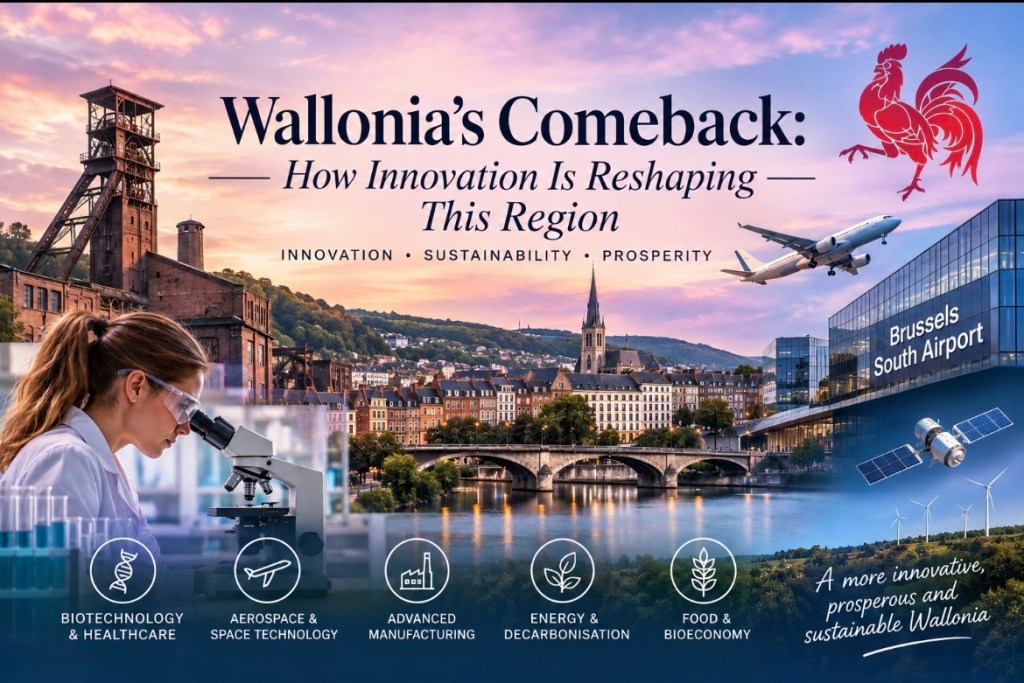
For decades, Wallonia was synonymous with industrial decline. Once one of Europe’s most powerful industrial regions, southern Belgium experienced a profound economic transformation following the decline of coal mining, steel production and traditional heavy industry. Today, however, Wallonia is attempting something considerably more ambitious than simply recovering its industrial past: it is building a new economy based on innovation, biotechnology, aerospace, advanced manufacturing and sustainable technologies.
The question is no longer whether Wallonia can reinvent itself, but whether it can transform its scientific excellence into lasting economic prosperity.
From Industrial Decline to Technological Ambition
Wallonia’s economic history is inseparable from the Industrial Revolution. Its coalfields, steelworks and industrial cities helped make Belgium one of the world’s earliest industrial powers. Cities such as Liège, Charleroi and Mons became important centres of manufacturing and engineering.
However, the decline of traditional industries during the twentieth century created significant structural challenges. Industrial restructuring contributed to unemployment, weakened economic activity and left parts of the region struggling to adapt.
Today, Wallonia is pursuing a different economic model. Rather than relying primarily on traditional manufacturing, it increasingly seeks to develop high-value industries capable of competing internationally.
The objective is to combine research, entrepreneurship, industrial investment and technological innovation into a more productive and diversified economy.
Five Strategic Industries Shaping Wallonia’s Future
Wallonia’s innovation strategy concentrates on several sectors where the region possesses significant expertise and competitive potential.
Biotechnology and Healthcare
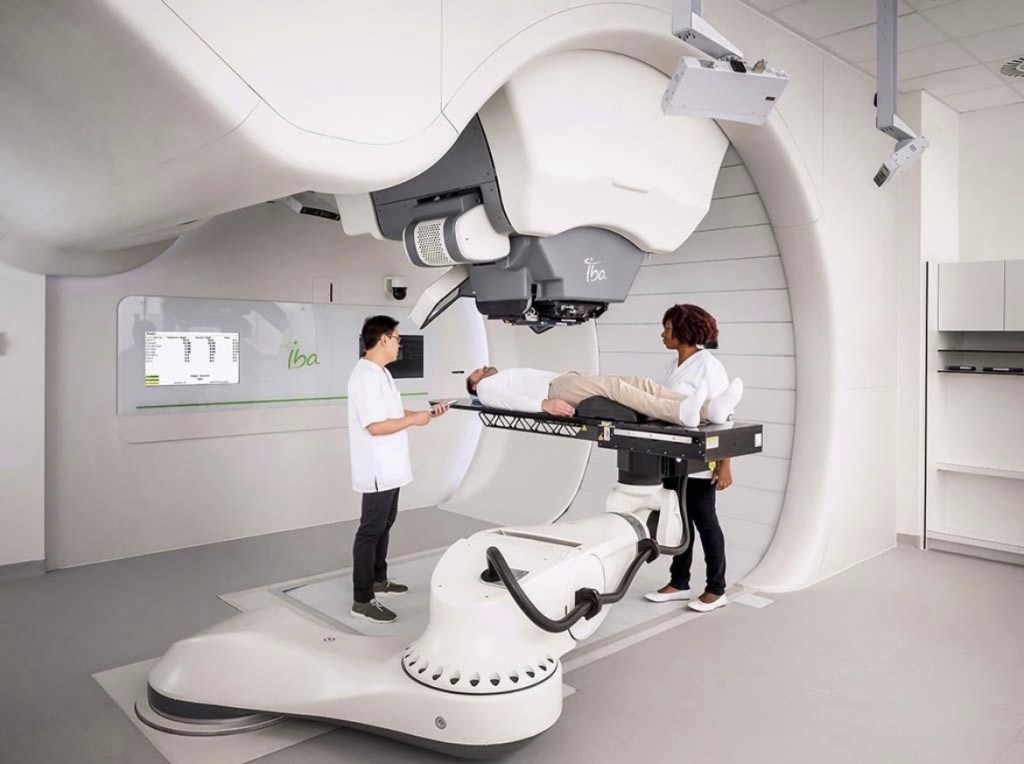
Perhaps Wallonia’s greatest technological strength lies in its pharmaceutical and biotechnology ecosystem.
Companies such as GSK operate major pharmaceutical facilities in the region, while universities, hospitals and research centres contribute to medical innovation.
Louvain-la-Neuve is home to IBA, a global medical technology company specialising in particle accelerators and proton therapy systems used in cancer treatment.
This ecosystem demonstrates how scientific research can become commercially valuable technology, generating exports, highly skilled employment and international investment.
Healthcare innovation also offers opportunities in advanced therapies, medical devices, diagnostics and personalised medicine.
Aerospace and Space Technology
Wallonia is also developing expertise in aerospace engineering and satellite technology.
Companies such as Aerospacelab are developing satellites and space-based telecommunications capabilities, while established aerospace suppliers contribute to aircraft and engine technologies.
The sector offers considerable potential because space infrastructure increasingly supports telecommunications, navigation, climate monitoring, agriculture and national security.
By strengthening aerospace manufacturing and research, Wallonia can participate in an industry increasingly important to Europe’s technological independence.
Advanced Manufacturing
Industrial innovation does not necessarily mean abandoning manufacturing.
Instead, Wallonia is attempting to modernise its industrial foundations through automation, robotics, advanced materials, digital technologies and more efficient production systems.
This transformation could help existing factories become more competitive while creating opportunities for new industrial businesses.
The challenge is particularly important for smaller companies, which often lack the resources to invest independently in technological modernisation.
Energy and Decarbonisation
Europe’s energy transition creates opportunities for Wallonia to develop new industrial capabilities.
Energy efficiency, renewable technologies, sustainable construction, industrial electrification and circular production processes can become sources of innovation and economic growth.
Reducing energy consumption and dependence on imported fossil fuels could also improve industrial competitiveness.
Food and the Bioeconomy
Agriculture and food production represent another potential innovation domain.
Research into sustainable agriculture, food biotechnology, alternative proteins and biological materials could create new businesses while supporting environmental objectives.
These industries demonstrate that innovation does not exclusively belong to laboratories or digital startups. It can also transform traditional economic activities.
Turning Scientific Excellence into Economic Growth
One of Wallonia’s most important advantages is its research infrastructure.
Universities, research centres, technology companies and innovation clusters provide the foundations for scientific discovery and commercial experimentation.
Organisations such as BioWin connect businesses, researchers and healthcare institutions, helping strengthen the regional life-sciences ecosystem.
However, scientific excellence alone is insufficient.
The real economic challenge is ensuring that research produces commercially successful companies, internationally competitive products and sustainable employment.
A region can invest heavily in research while still struggling to generate sufficient productivity growth.
Consequently, Wallonia’s economic future depends not only on scientific discoveries but also on entrepreneurship, access to capital, industrial investment and international market access.
The Economic Challenges That Remain
Despite its technological strengths, Wallonia continues to face significant economic difficulties.
Unemployment remains higher than in Flanders, labour-force participation is relatively weak, and several communities continue to experience the consequences of industrial restructuring.
Economic growth has also remained comparatively modest.
Innovation must therefore become more than a strategy for attracting prestigious research projects. It must contribute to a broader transformation of the regional economy.
This requires improving education and vocational training, strengthening entrepreneurship, encouraging investment and helping businesses expand internationally.
It also requires creating more opportunities for young people to enter productive industries and develop highly skilled careers.
Could Wallonia Become a European Innovation Hub?
Wallonia possesses several ingredients necessary for economic transformation: universities, industrial expertise, pharmaceutical companies, aerospace capabilities, research infrastructure and access to European markets.
Its geographical position between major European economic centres also offers advantages for logistics and international business.
The opportunity is to build an economic identity around industries where Wallonia can genuinely excel.
Rather than competing directly with Flanders in every sector, Wallonia could increasingly specialise in biotechnology, aerospace, advanced manufacturing and sustainable industrial technologies.
Such specialisation could strengthen its international competitiveness while creating complementary relationships with neighbouring regions.
Conclusion: Reinventing Wallonia
Wallonia’s economic transformation represents a fascinating example of regional reinvention.
Its future will not be determined simply by how much money it invests in innovation, but by how effectively it converts scientific knowledge into businesses, exports, productivity and employment.
The region has already demonstrated that it can develop internationally competitive technological industries.
Its next challenge is making that success widespread enough to transform the prosperity of its population.
Wallonia’s future may ultimately depend on whether it can turn its scientific excellence into an economic renaissance — replacing the industries of yesterday with the technologies, companies and opportunities of tomorrow.


Leave a Reply