Introduction
Education is often described as one of the most powerful tools for transforming a country. It can break cycles of poverty, create economic opportunities and give young people the skills to shape their own futures. In Zimbabwe, education has historically been a source of national pride. The country has achieved relatively high levels of primary-school participation compared with many other countries in the region. Yet behind these encouraging statistics lies a much more complicated reality: getting children into school is only the first step. Keeping them there, giving them quality education and ensuring that every child has the same opportunities remain major challenges.
A Country That Values Education
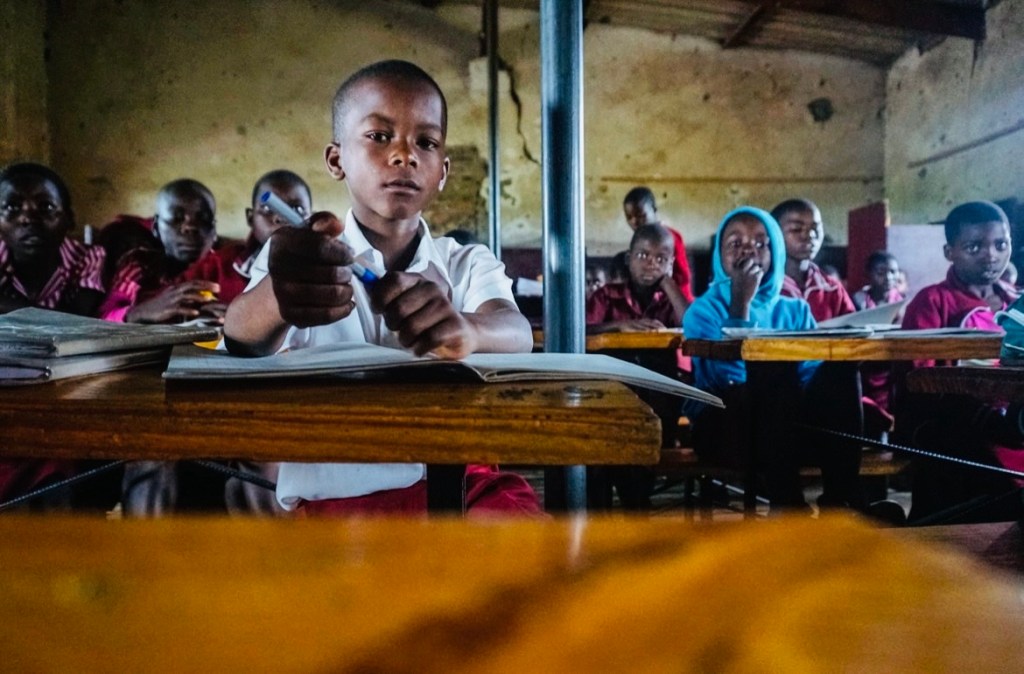
Zimbabwe has long placed significant cultural importance on education. The country has one of the stronger education systems in sub-Saharan Africa in terms of basic literacy and primary-school participation. Around nine out of ten children of primary-school age attend school, and the primary completion rate is also relatively high.
However, the picture changes dramatically as children grow older.
According to UNICEF data, attendance falls to around 52% among adolescents of lower-secondary-school age and 37% among those of upper-secondary-school age. This means that although many Zimbabwean children enter school, a significant proportion do not make it all the way through secondary education.
In 2024, Zimbabwe recorded approximately 4.7 million pupils enrolled nationwide, demonstrating the enormous scale of the country’s education system.
The challenge is therefore not simply opening the school gates. It is making sure children can continue walking through them.
Poverty: The Biggest Barrier
One of the most important factors affecting education in Zimbabwe is poverty.
For many families, sending a child to school involves costs beyond tuition: uniforms, books, transportation, food and other school-related expenses can become significant burdens. When a family is struggling to afford basic necessities, education can become difficult to prioritize.
The consequences are particularly severe in rural communities. Zimbabwe has a large rural population, and children living outside major urban centres may have to travel considerable distances to reach school. UNICEF identifies long distances, insufficient resources and economic hardship among the continuing barriers to quality education.
This creates an uncomfortable paradox: education is supposed to be the pathway out of poverty, yet poverty itself can prevent children from accessing education.
The Rural-Urban Divide
Where a child is born can make an enormous difference to their educational opportunities.
Children in urban areas generally have greater access to schools, teachers, electricity, technology and educational materials. Rural schools can face shortages of textbooks, infrastructure and qualified teachers.
The disparities become even greater at higher levels of education. A UNICEF and WFP case study found that completion of upper-secondary education was dramatically unequal by household wealth, with children from wealthier households far more likely to reach this level than those from the poorest households.
This means that two Zimbabwean children of the same age can grow up in the same country while experiencing completely different educational realities.
Girls And Education
Education also intersects with gender.
Zimbabwe has made important progress in girls’ education, and girls sometimes perform better than boys in certain stages of schooling. In 2024, for example, the transition rate from Grade 7 to Form 1 was higher for girls than boys: 81.1% compared with 77.9%.
But girls face specific challenges later in their education. Early marriage, pregnancy and social expectations can interrupt schooling. UNICEF and WFP have highlighted early marriage as an important contributor to girls dropping out and to poorer educational outcomes.
Education therefore isn’t simply about providing classrooms. It is also about creating an environment where girls can remain in school long enough to benefit from their education.
What About Quality?
Access is only half of the problem.
A child can spend years inside a classroom without necessarily receiving the education they need. Zimbabwe continues to struggle with learning outcomes, teacher shortages, limited teaching materials and inadequate infrastructure.
One particularly striking statistic illustrates the problem: UNICEF and WFP reported that only 48% of Grade 7 children demonstrated the numeracy skills expected to have been acquired by Grade 3, while 71% reached the corresponding literacy benchmark.
This is known as the learning crisis: children may technically be attending school, but they are not necessarily acquiring foundational skills at the expected pace.
Technology Could Change The Game
Technology offers Zimbabwe an opportunity to leapfrog some traditional educational barriers.
Digital classrooms, offline learning platforms, solar power and internet connectivity could help students access educational resources even when traditional infrastructure is limited.
There are already examples of this happening. UNICEF supported the solarization of 154 schools, benefiting more than 62,000 learners and 1,700 teachers. Some of these schools also received offline Learning Passport servers to support blended learning.
This is particularly important in rural areas, where reliable electricity and internet access can be limited.
But technology should not become another source of inequality. Giving urban students laptops while rural schools lack electricity would simply create a new digital divide.
A System Worth Investing In
Zimbabwe’s education system is not a story of failure. In many ways, it is a story of progress under pressure.
Primary-school participation remains high. Government agencies, UNICEF, UNESCO and other partners are investing in teacher development, school infrastructure, inclusion, digital learning and financial support. In 2024, UNICEF-supported school improvement grants helped keep 2,799 disadvantaged schools operational, reaching nearly 894,000 learners.
But the remaining challenges are enormous.
Zimbabwe needs stronger investment in teachers, infrastructure, school meals, educational materials, digital access and support for vulnerable children. Most importantly, education policy needs to focus not only on how many children are sitting in classrooms, but on what those children are actually learning.
Because education is ultimately about more than passing exams.
It is about giving a child in rural Zimbabwe the same chance to become an engineer, entrepreneur, doctor, scientist, teacher or leader as a child growing up in Harare.
Conclusion
Zimbabwe already has the foundations. The question now is whether it can turn those foundations into an education system where geography, gender and family income no longer determine how far a child’s ambitions can take them.


Leave a Reply