Introduction
The Nobel Prize is one of the most prestigious and widely recognized awards in the world, honoring individuals and organizations whose work has made an extraordinary impact on humanity. Established through the will of Swedish inventor, engineer, and philanthropist Alfred Nobel, the prize has been awarded annually since 1901 in fields such as Physics, Chemistry, Physiology or Medicine, Literature, and Peace. Later, the Prize in Economic Sciences was added in Nobel’s memory.
Over the decades, Nobel laureates have included groundbreaking scientists, influential writers, courageous activists, and visionary leaders who have shaped the course of history through innovation, discovery, and dedication to human progress. From revolutionary medical breakthroughs to inspiring efforts toward global peace, the achievements recognized by the Nobel Prize continue to influence societies around the world.
Beyond the celebration of individual excellence, the Nobel Prize serves as a symbol of the power of knowledge, creativity, and perseverance. It highlights the importance of addressing humanity’s greatest challenges and encourages future generations to pursue meaningful contributions to society.
As of 2026, the Nobel Prize is being handed out to exceptional individuals across 6 categories: Medicine or Physiology, Chemistry, Physics, Economics, Peace and Literature.
But it wasn’t always like that. The Nobel Prize has a long history and evolution behind.
A Reflection Of Modern Society
It has primarily awarded and recognized men and their contributions. There are hundreds and hundreds of male winners, but only 65 female winners.
Here’s a clear breakdown of women Nobel laureates by category based on the most recent totals up to the mid-2020s:
• Physics: 5
(including Marie Curie, Donna Strickland)
• Chemistry: 8
(including Dorothy Hodgkin, Jennifer Doudna)
• Physiology or Medicine: 13
(including Tu Youyou)
• Literature: 17
(including Toni Morrison, Annie Ernaux)
• Peace: 19
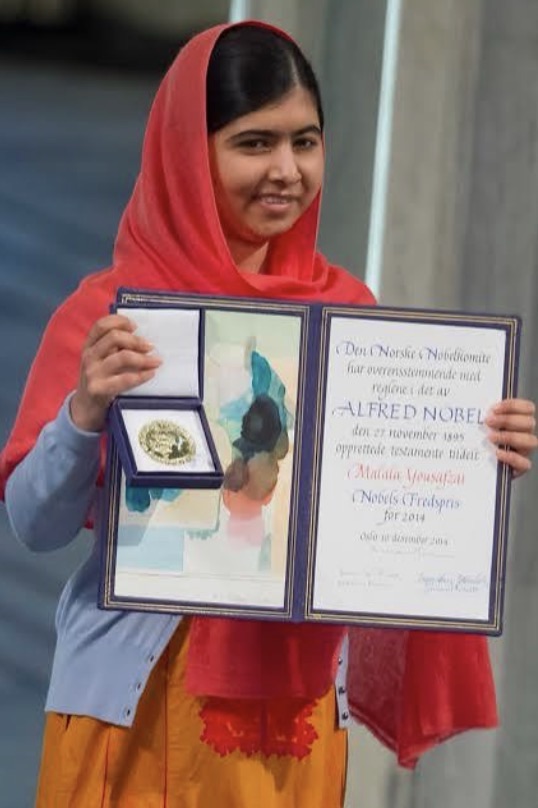
(including Malala Yousafzai, Mother Teresa)
• Economic Sciences: 3
(including Elinor Ostrom, Claudia Goldin)
• Total: 65 Nobel Prizes awarded to women
What Stands Out
The imbalance is pretty stark:
- Only 5 in Physics vs. 19 in Peace
- Economics is especially recent and still very low
- Science fields overall lag behind literature and peace
The Nobel Gender Gap
Since 2000, the Nobel gender gap has closed fastest in Medicine and Chemistry, while Physics remains the most resistant to change; meanwhile Literature and Peace were already comparatively accessible to women and therefore show steadier rather than dramatic improvement.
Male vs Female Winners
As of 2025, approximately 894 men have been awarded Nobel Prizes or the Nobel Memorial Prize in Economic Sciences as individual laureates.
By comparison, 67 women and 27 organizations have also received Nobel honors.
If you count total Nobel Prize awards rather than unique people, men have received about 927 Nobel awards, because some laureates have won more than once.
Multiple Winners
The men who have won more than one Nobel Prize are:
John Bardeen
He won the Nobel Prize in Physics in 1956 and the Nobel Prize in Physics (1972)
He is the only person to win the Physics Nobel twice.
Frederick Sanger
He won the Nobel Prize in Chemistry in 1958 and the Nobel Prize in Chemistry 1980.
He is the only person to win the Chemistry Nobel twice.
Linus Pauling
He won the Nobel Prize in Chemistry in 1954 and thr Nobel Peace Prize (1962).
He is the only person to receive two unshared Nobel Prizes.
Marie Curie
If you include women, then Marie Curie also won twice: Physics in 1903, Chemistry in 1911. She was the first person to win the Nobel Prize twice.
Conclusion
Ultimately, the Nobel Prize represents far more than scientific, literary, or humanitarian achievement. It also reveals the inequalities that shape recognition and influence whose contributions are remembered. The Nobel Gender Gap remains striking: men have historically received the vast majority of awards, while women continue to be underrepresented across nearly every category. Although female laureates such as Marie Curie, Malala Yousafzai, and other pioneering women have challenged these boundaries, the imbalance persists. Multiple Nobel laureates further demonstrate how exceptional contributions can transform entire fields, proving that groundbreaking work is not always limited to a single discovery or achievement. However, the question remains: how many equally deserving contributions have gone unrecognized simply because of gender, geography, or historical circumstances? Looking beyond the winners allows us to question not only who changes the world, but also who gets credit for doing so.
The Nobel Prize is not just an award, it’s a reflection of the society it honors and whose work get recognized.


Leave a Reply